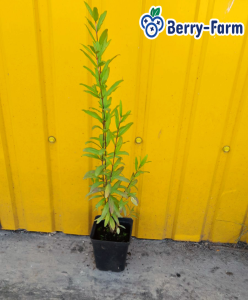
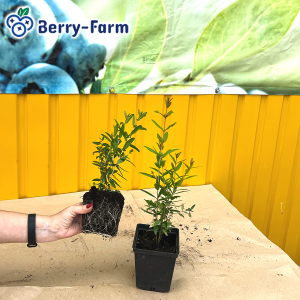
Bush: Medium-sized, compact, and dense, reaching 1.5–2 m in height and up to 1.5 m in width. It has a well-developed, branched root system that ensures quick adaptation after planting. Begins fruiting in the 2nd–3rd year, distinguished by high productivity and resistance to major diseases. Suitable both for open ground and container cultivation.
Flower: Large, bright red flowers 5–7 cm in diameter appear in summer. Blooming is long, abundant, and decorative, making the plant not only fruit-bearing but also highly ornamental in the garden.
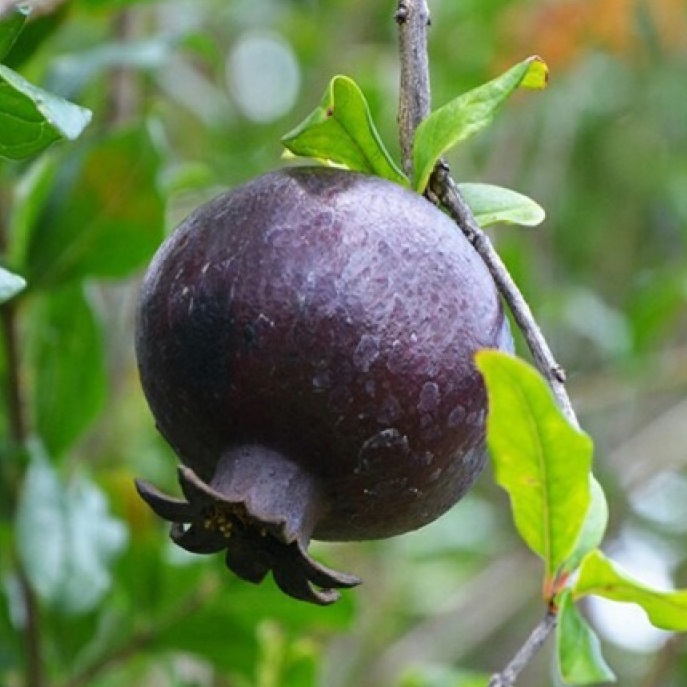
Fruits: Round, with dark red to almost black glossy skin. Average weight 250–350 g. Rich flavor — sweet with a pleasant acidity. The flesh is juicy, aromatic, and rich in nutrients. Fruits are excellent for fresh consumption, as well as for juices, desserts, and preservation.
Care: The plant requires regular watering, especially during active growth and fruiting. Pruning is necessary to shape the crown and remove old branches. Responds well to mulching, which helps retain moisture and improve the soil. Fertilization is recommended: nitrogen in spring to stimulate growth, potassium and phosphorus in summer to enhance flowering and fruit ripening.
Soil: Grows best in fertile, light, well-drained soils with neutral or slightly alkaline reaction. It is important to choose a sunny spot protected from wind and drafts. Does not tolerate waterlogging.
Frost resistance: The variety withstands frost down to –15°C without shelter, which makes it suitable for cultivation in northern regions with a temperate climate.
Log in to be able to leave a comment
Comments (0)