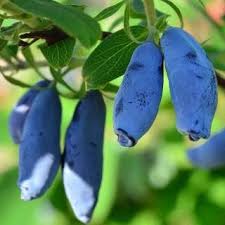
Honeysuckle Ruben is a high-yielding variety with a mid-season ripening period. The bush is vigorous and spreading, reaching up to 1.5 m in height. The variety is characterized by high frost resistance — it can withstand temperatures down to -35°C, tolerates spring frosts well, and produces stable yields under various climatic conditions. To increase productivity, it is recommended to plant other honeysuckle varieties nearby for cross-pollination.
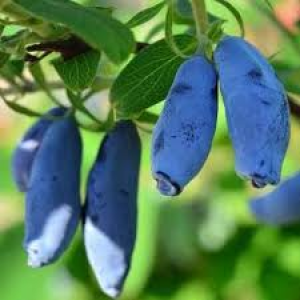
Berries: The fruits are large, elongated-oval in shape, dark blue with a pronounced wax coating. The average berry weight is 1.5–2.5 g. The taste is balanced — sweet with a slight acidity and no bitterness. The flesh is dense and juicy. The berries contain vitamins, antioxidants, and trace elements, and are suitable for fresh consumption and processing.
Harvest: Ripening occurs in June. The berries ripen uniformly, do not fall off after maturity, and remain well attached to the bush. The yield of a mature bush is 3–5 kg. The fruits are suitable for fresh consumption, freezing, and processing into jams, preserves, and juices.
Care: Honeysuckle grows best in sunny or slightly shaded areas with fertile, well-drained, and moderately moist soil. During dry periods, regular watering is required. To obtain larger and juicier berries, consistent irrigation is recommended during flowering and fruit filling. The variety is highly frost-resistant and does not require winter protection. In spring, it is advisable to apply organic or mineral fertilizers and carry out sanitary pruning to maintain plant health and stable yields.
Log in to be able to leave a comment
Comments (0)