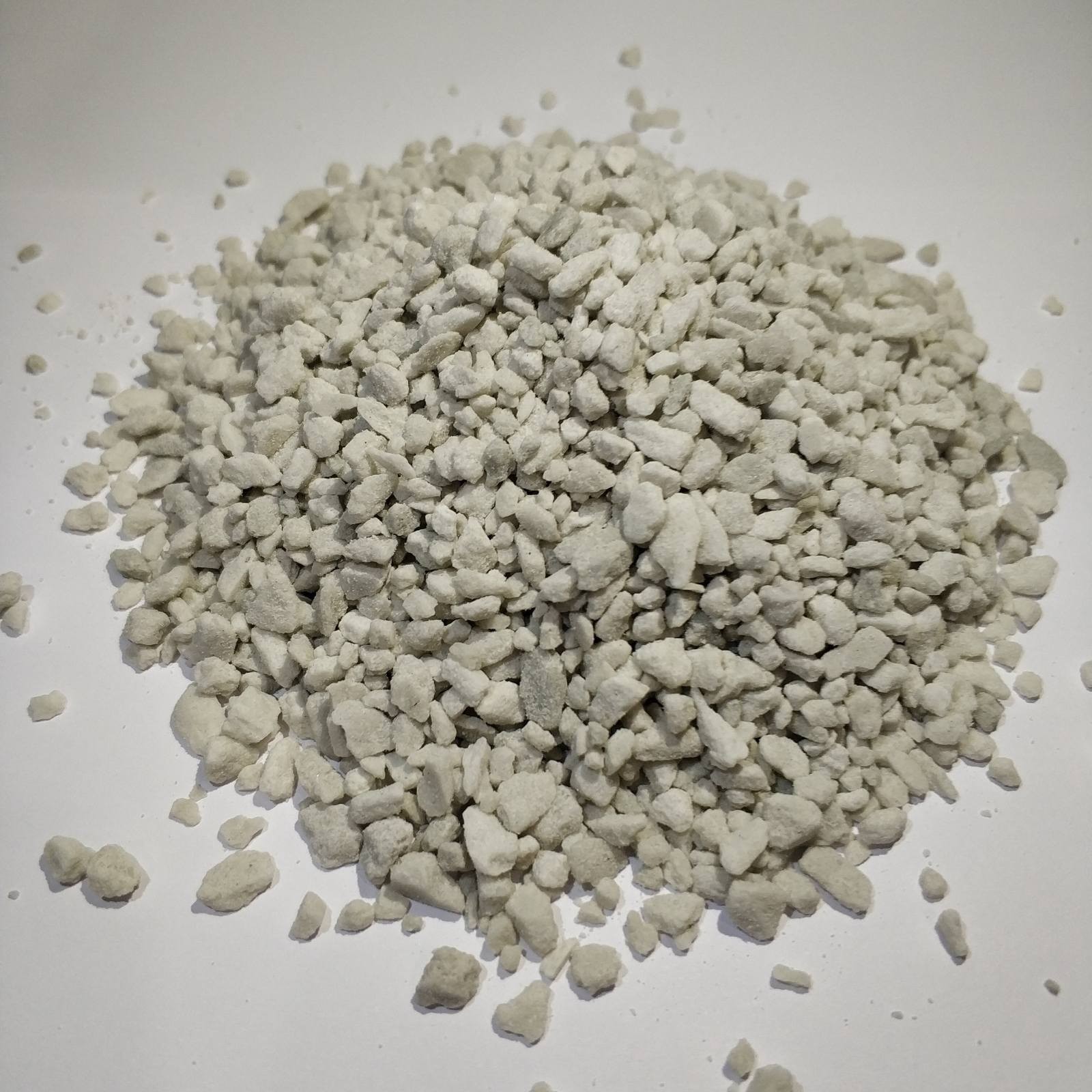
Ammonium sulfate is one of the most popular and effective products for increasing crop yields. It is best applied in spring.
The fertilizer contains 24% sulfur and 21% nitrogen and makes the soil more acidic. Its main benefit appears at the early stages of plant growth. It strengthens the root system, making it more robust, and improves the health and vigor of leaves and stems. This positively influences the future harvest.
Uses of ammonium sulfate:
• improves juiciness and taste of fruits
• increases oil content in oilseed crops (rapeseed and sunflower)
• strengthens plant immunity against diseases
• increases frost and drought resistance
• improves storability of fruits
Advantages of ammonium sulfate:
• has a long shelf life
• does not leach out with rain or groundwater and dissolves slowly in soil
• helps prolong storage of harvested crops
• combines well with other fertilizers
• is not toxic to plants, humans, animals, or beneficial insects
• does not cause nitrate accumulation in fruits
• has a low cost
Disadvantages of ammonium sulfate:
• with long-term use, it may acidify the soil
• it does not protect against insects, as it has no insecticidal or fungicidal properties
Ammonium sulfate can be applied dry during soil cultivation. Depending on the type of plant, the application rate is 35–45 g per square meter. The granules can also be used as a liquid solution for root and foliar feeding. The rate and method depend on the crop.
For berry bushes, root feeding can be done using a solution of 10 g per 10 liters of water (1 liter of solution per bush).
Log in to be able to leave a comment
Comments (0)