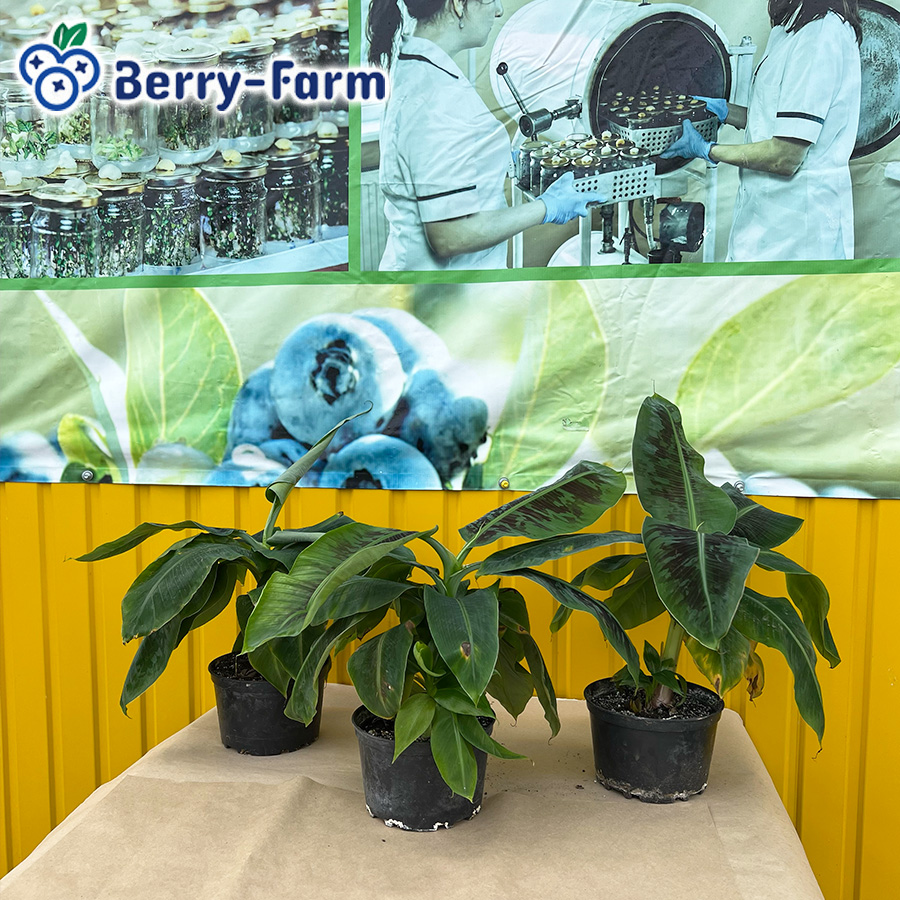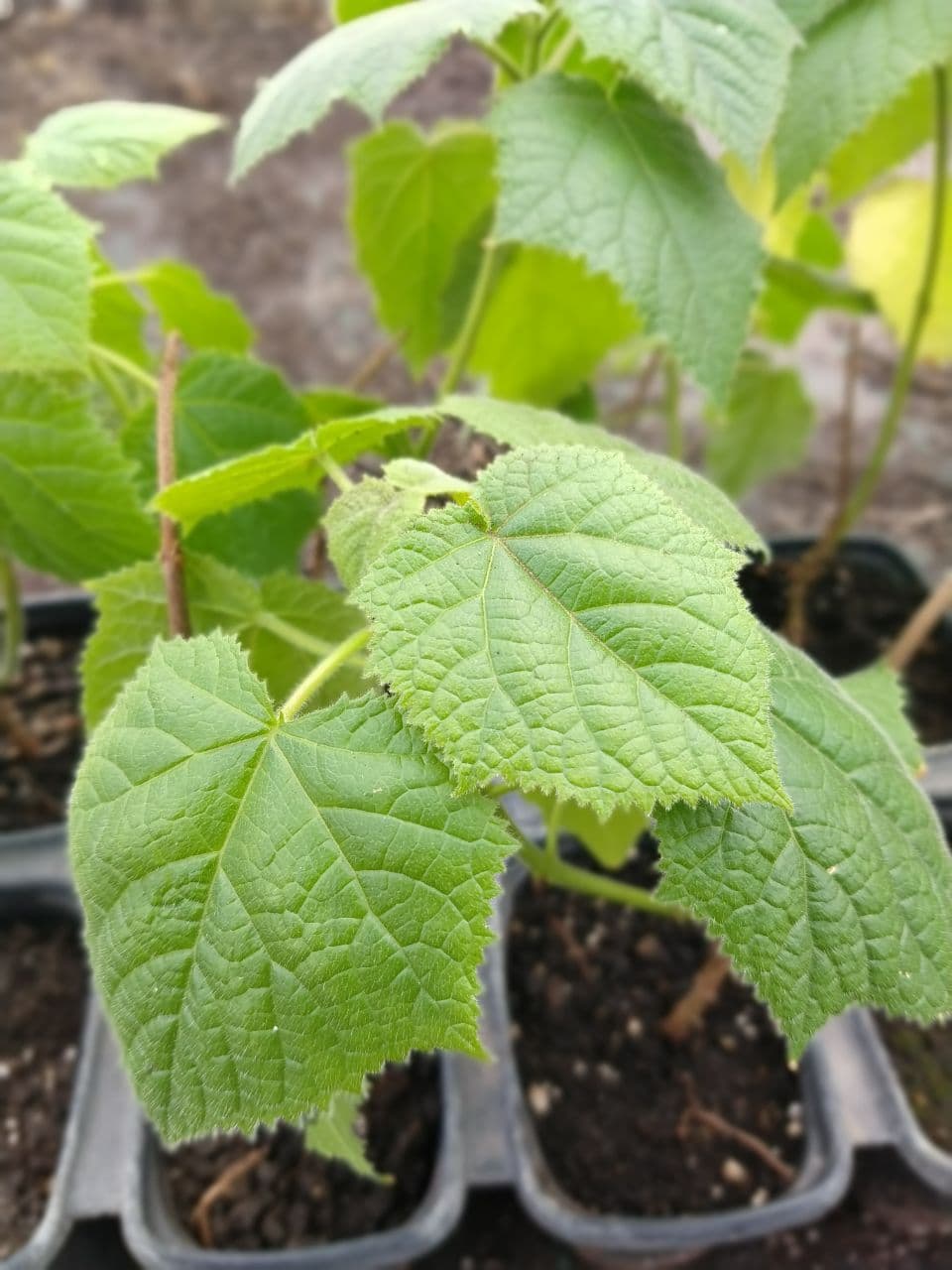
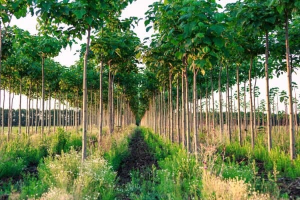
Paulownia 'Phoenix' cultivar was developed in our laboratory, Berry-Farm Ukraine, using the In-Vitro method.
This variety is adapted and zoned specifically for the climate and conditions of Ukraine. It is cultivated exclusively for industrial purposes.
Paulownia (also known as the Phoenix tree, Kiri, or Adam’s tree) is a genus of fast-growing deciduous trees, recognized as the fastest-growing tree species in the world. It grows straight and tall, is lightweight, durable, easy to process, and has a high regenerative ability. Under optimal conditions and proper care, it can grow 3 to 5 meters per year.
Key Features and Advantages of Paulownia:
-
Rapid Growth
-
High Regeneration Capacity
-
Environmental Benefits
(One tree absorbs an average of 22 kg of CO₂ and releases 6 kg of oxygen per hour. Thanks to its deep root system, it improves rather than depletes the soil, enriches it with nitrogen, and prevents erosion.)
-
Versatility in the Wood Industry
(Used for furniture, plywood sheets, musical instruments, surfboards, pulp and paper production, and even shipbuilding.)
-
Application in Bioenergy
(When burned, biofuel releases significantly less CO₂ into the atmosphere, produces 20–30 times less sulfur oxide, and 3–4 times less ash compared to coal.)
-
Agricultural Use
(Used as fodder for rabbits, goats, sheep, horses, and cows. Also serves as an excellent honey plant.)
Care Instructions:
Paulownia trees can be grown on almost all soil types. The optimal soil pH is between 5 and 7.
Soil preparation starts in autumn to allow moisture retention and compaction during winter.
Saplings should be planted in spring when the average daily temperature exceeds +20°C. The ideal planting period is during the second and third ten-day periods of May or the first ten-day period of June.
Paulownia blooms in spring with white-violet flowers, even before the leaves appear.
This plant requires regular and abundant watering.
-
Young trees: once every 10 days, 10 liters of water per tree.
-
Mature trees: once every two weeks, 15–20 liters per tree.
Fertilization should be done in spring or autumn using peat, poultry manure, or biohumus.
Paulownia has a high resistance to pests and fungal diseases, but May and June beetles can cause damage — they eat the leaves, and their larvae feed on the roots.
To prevent this, it is important to apply effective pest control products in time. We recommend Force granules or Entocid.
Paulownia can be propagated from seeds or vegetatively through root and stem cuttings.
At our farm, we use the in-vitro method.
Microclonal propagation is a fast and effective way to produce high-quality, uniform planting material in large quantities.
In the spring, before the leaves appear
2nd - 3rd decade of May - 1st decade of June
Resistance to diseases and pests
Woodworking Bioenergy Agricultural
Log in to be able to leave a comment
Comments (0)